How to Block Ads on Android Without an App — Built-In Methods That Actually Work
Pop-up ads in the middle of an article. Video ads that play at full volume before a YouTube tutorial. Banner ads that cover half the screen on a free app. We've all been there — and it's genuinely exhausting.
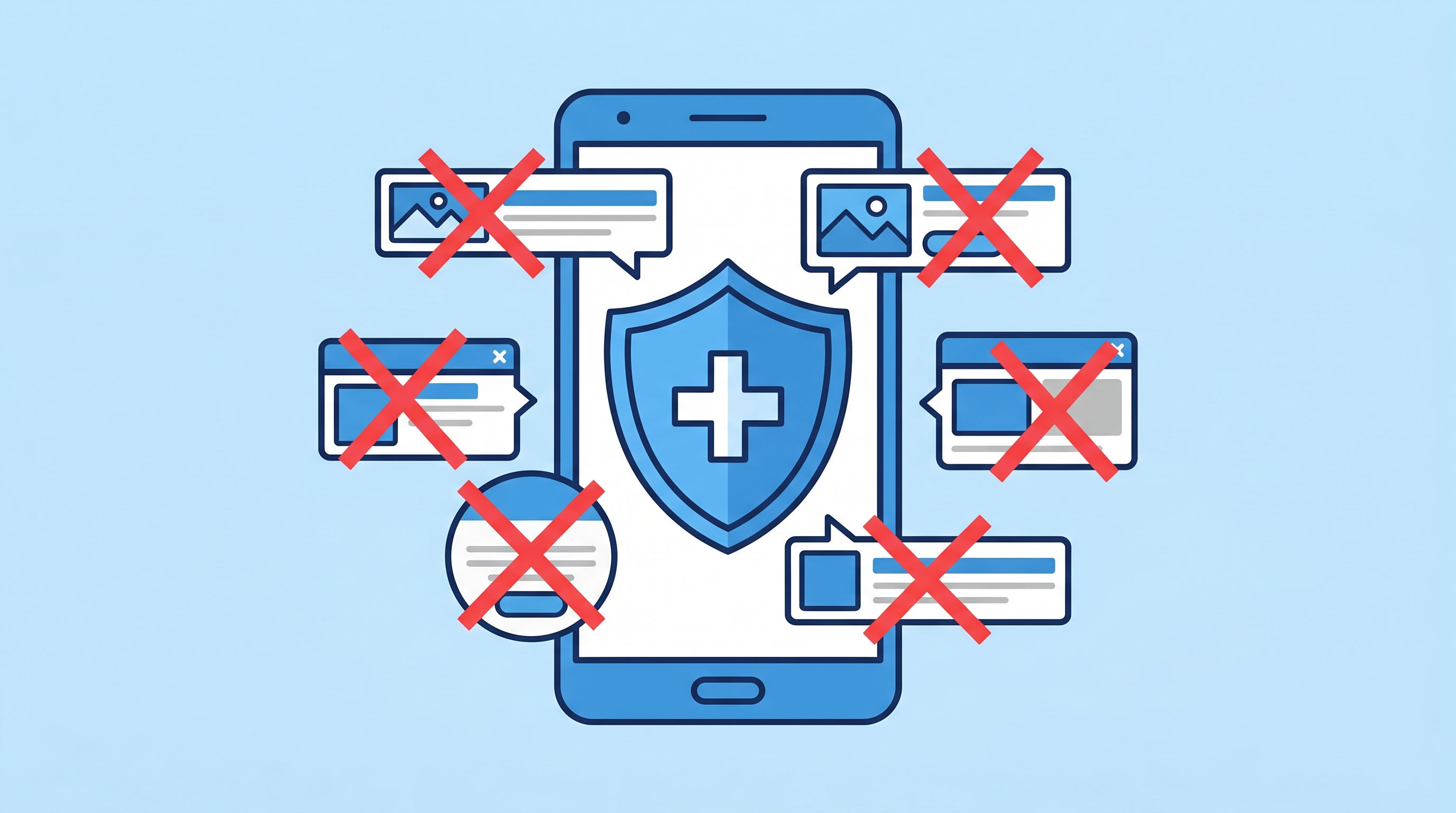
The obvious solution is downloading an ad blocker app, but here's the thing — most good ones cost money, and the free ones often come with their own issues like slow connections or sketchy permissions. What if you could block ads on Android without installing any app at all?
Turns out, you absolutely can. Android has some surprisingly powerful built-in settings that cut off ads system-wide — and most people have no idea they exist. Let me show you exactly how.
Method 1: Use Private DNS to Block Ads System-Wide — Best Overall Method
This is hands down the most powerful method on this list — and it works across your entire phone, not just in one browser. Private DNS lets you route your internet traffic through a DNS server that automatically filters out known ad-serving domains.
The best part? It's a built-in Android feature available on Android 9 and above — zero apps required, completely free, and takes about 30 seconds to set up. I did this on my phone six months ago and the difference in browsing experience was immediate.
How to Set Up Private DNS on Android:
- Go to Settings → Network & Internet → Advanced → Private DNS.
- Select "Private DNS provider hostname."
- Type in one of these free ad-blocking DNS addresses:
- dns.adguard.com — AdGuard's free DNS, blocks ads and trackers
- 1dot1dot1dot1.cloudflare-dns.com — Cloudflare DNS, fast and privacy-focused
- dns.quad9.net — Quad9, blocks malware domains too
- Tap Save.
- Done — ads will now be blocked system-wide across apps and browsers.
I personally use dns.adguard.com and it blocks the vast majority of ads across my browser, apps, and even some in-app ads. No app needed, no battery drain, no performance hit. This one alone is worth bookmarking this article for.
Method 2: Block Ads Directly in Chrome Browser
If most of your ad frustration happens while browsing the web, Chrome has some built-in settings that help reduce the worst offenders — especially intrusive pop-ups and auto-playing video ads.
Chrome Settings to Enable:
- Open Chrome on your Android.
- Tap the three-dot menu → Settings.
- Tap Site Settings.
- Enable these settings:
- Pop-ups and redirects → Blocked
- Intrusive ads → Blocked
- Notifications → Blocked (stops ad notification spam)
This won't eliminate every ad but it significantly reduces the most annoying ones — especially the full-screen pop-ups and redirect ads that hijack your browser. Combined with the Private DNS method above, you're covering a lot of ground for free.

Method 3: Reduce YouTube Ads Without Premium
YouTube ads deserve their own section because they're a special kind of frustrating. While you can't fully block YouTube ads without Premium or a third-party app, there are two free tricks that genuinely help.
Trick 1 — Use YouTube in a Browser
Open YouTube in Chrome or Firefox instead of the app. With the Private DNS method active and Chrome's ad settings enabled, you'll see significantly fewer ads than in the YouTube app. It's not perfect but it's noticeably better.
Trick 2 — Enable Data Saver in YouTube
In the YouTube app, go to Settings → General → Data saving mode. This reduces some ad tracking and data usage. It's a small improvement but every bit helps when you're not paying for Premium.
Method 4: Use Android's Built-In Data Saver Mode
Android's Data Saver mode (Settings → Network & Internet → Data Saver) restricts background data usage for all apps. While it's primarily designed to save data, it has a side effect of blocking many background ad requests that load before you even see an ad.
It won't block visible ads already embedded in content, but it does reduce the number of ad calls apps make in the background — which also helps your battery life as a bonus. Not a complete solution on its own, but a nice complement to the DNS method.
Quick Comparison: Which Method Works Best?
| Method | Coverage | Difficulty | Best For |
|---|---|---|---|
| Private DNS | System-wide ⭐⭐⭐⭐⭐ | Easy | Best overall — blocks most ads everywhere |
| Chrome Settings | Browser only ⭐⭐⭐ | Very Easy | Reducing browser pop-ups and redirects |
| YouTube Browser Trick | YouTube only ⭐⭐ | Very Easy | Fewer YouTube ads without Premium |
| Data Saver Mode | Background ads ⭐⭐ | Very Easy | Reducing background ad requests |
Pro Tips for an Even Cleaner Ad-Free Experience
- Combine Private DNS + Chrome settings for the best coverage — together they block the majority of ads without any app.
- If a website suddenly stops loading after setting up Private DNS, try switching the DNS back to automatic temporarily — some sites flag DNS-based ad blockers.
- Use Firefox for Android as your browser — it supports uBlock Origin extension directly, which is the gold standard of ad blocking completely free.
- Check your notification settings regularly — many apps sneak ad notifications in through permission you forgot you granted.
- Review and revoke unnecessary app permissions every few months — many ad SDKs rely on location and activity data to serve targeted ads.
Frequently Asked Questions
Does Private DNS slow down my internet connection?
In most cases, no — and it can actually make browsing feel faster since your phone no longer loads ad content. AdGuard DNS and Cloudflare DNS servers are both extremely fast globally. Some users report slightly slower initial DNS lookups in certain regions, but this is usually unnoticeable in everyday use.

Can I block ads inside apps using these methods?
The Private DNS method blocks a significant portion of in-app ads since most ads are served from known ad domains that DNS blockers filter out. However, some apps serve ads from their own domains, which DNS blocking won't catch. For complete in-app ad blocking, a dedicated app like AdGuard (paid) is more thorough.
Is blocking ads legal?
Yes — using ad blockers is completely legal in virtually all countries. It's a personal choice about how you consume internet content. That said, if you love a website or creator, consider whitelisting them in your settings — ad revenue is often how they keep their content free for everyone.
Olivia's Final Thoughts
I genuinely had no idea Android had these built-in tools until I started digging around. The Private DNS trick especially — it's been running on my phone for months now and the browsing experience is so much cleaner. No app, no subscription, no battery drain. Just set it and forget it.
Start with the Private DNS method — it takes 30 seconds and gives you the biggest improvement immediately. Then layer in the Chrome settings for extra coverage in your browser. That combo handles the vast majority of annoying ads for free.
Did the Private DNS trick work for you? Drop a comment below — I'd love to know which DNS server you went with! And if this saved you from downloading yet another app, share it with someone who needs a cleaner browsing experience. 😊
'Tech' 카테고리의 다른 글
| Canva vs Adobe Express Which Is Better for Beginners? (0) | 2026.06.03 |
|---|---|
| 5 Best Free PDF Editor Apps for Android in 2026 (0) | 2026.06.02 |
| How to Recover Deleted Photos on Android (0) | 2026.06.02 |
| How to Merge PDF Files Without Adobe Free & Easy (0) | 2026.05.30 |
| How to Create a QR Code for Free in Under 2 Minutes (0) | 2026.05.30 |